Using a herbal steam cabinet starts with health screening, an appropriate exposure time and knowing when to stop. This guide explains what to do before, during and after a session.
1. Before entering the herbal steam cabinet
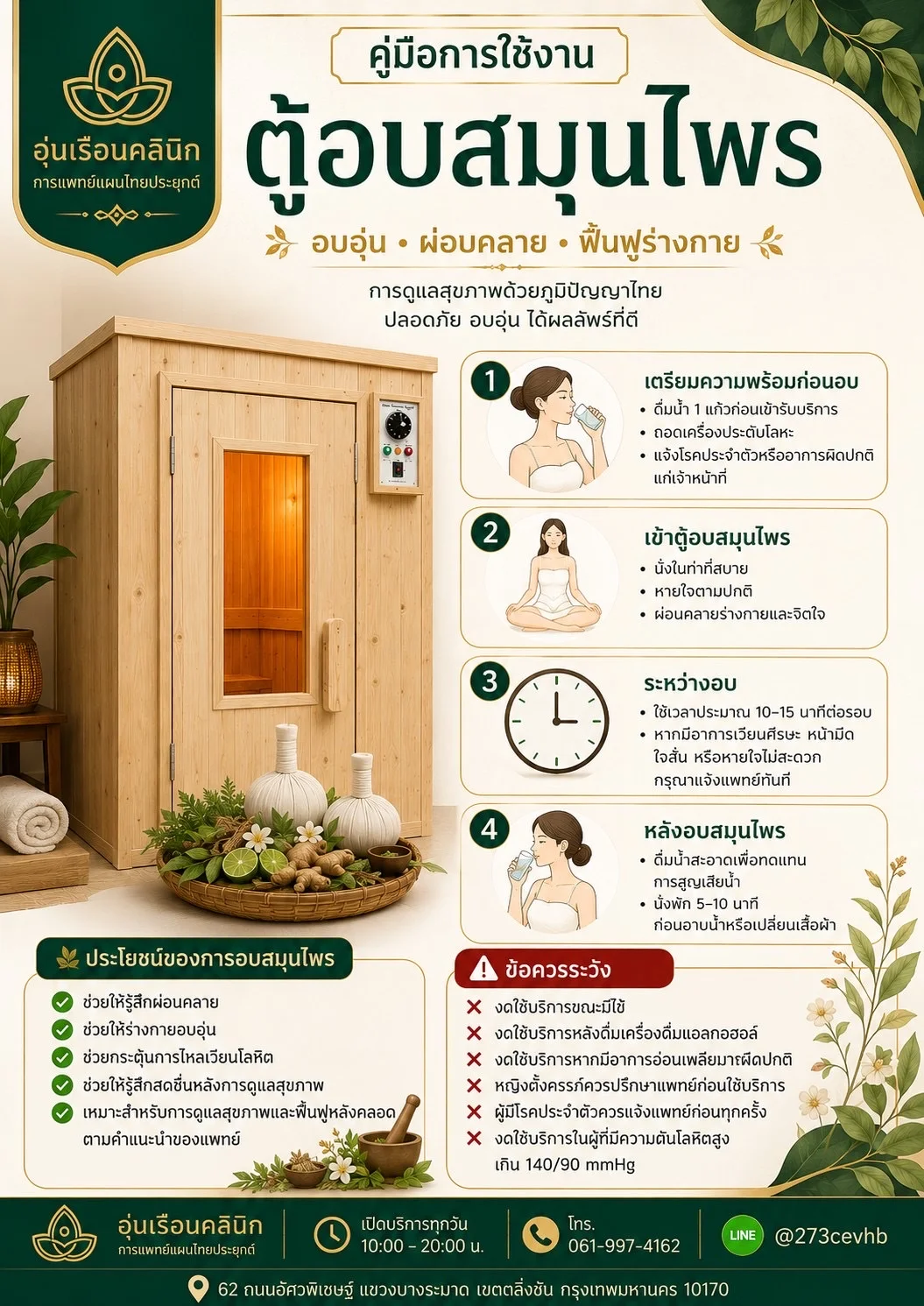
Tell the practitioner about medical conditions, medicines, pregnancy, herbal allergies and any current symptoms. Complete the service’s screening, including blood pressure checks where appropriate. Drink an appropriate amount of water, remove metal jewellery and change into clean clothing for the session. Follow your clinician’s advice if you have a fluid restriction.
2. During the session: follow the agreed time limit
Sit comfortably and breathe normally. Avoid steam outlets and hot equipment, and do not increase the temperature or duration yourself. Sessions may be divided into rounds of about 10–15 minutes, but suitable exposure depends on health, temperature, humidity and individual tolerance. This is not a minimum time you must endure.
Stop and tell staff immediately if you feel dizzy, faint, nauseated, have palpitations or find breathing difficult. High humidity slows sweat evaporation, so sweating does not rule out overheating. See NCCEH guidance on sauna and steam-room safety.
3. Afterwards: hydrate and rest before walking
Change position slowly when leaving the cabinet. Drink water as appropriate and rest until you feel comfortable and have cooled down before showering or changing clothes. There is no need to rush into another round. Tell staff if dizziness or weakness persists, and do not walk to the bathroom alone while unsteady.
4. When to postpone or seek medical advice
Postpone if you have a fever, dizziness, nausea, marked weakness or have consumed alcohol. Avoid a session while fasting or immediately after a large meal. People with heart or kidney disease, epilepsy, severe asthma or abnormal blood pressure should have suitability assessed first. See Thai Department of Traditional and Alternative Medicine guidance (Thai).
During pregnancy, avoid overheating and speak with the maternity clinician before using a steam room. Heat exposure can cause dehydration, faintness and increased core temperature, particularly concerning in early pregnancy. See NHS practice guidance.
5. Use the poster alongside an individual assessment
The Thai-language poster below summarises preparation, the session and aftercare. Its times are general guidance, not a guarantee of safety. The 140/90 mmHg blood pressure figure shown in the image is not a standalone clearance rule; symptoms, medical conditions, medicines and other findings also matter.
After childbirth, treatment choices depend on wound healing and recovery. Delivery alone does not establish readiness for steam therapy, and a session must not replace medical care for concerning symptoms.