Heated salt-pot care, or thap mo kluea, is part of some Thai traditional postpartum programmes. Traditional theory explains recovery through the four elements. That framework is not a measured loss of physical elements or proof that heat speeds recovery.
What is heated salt-pot care?
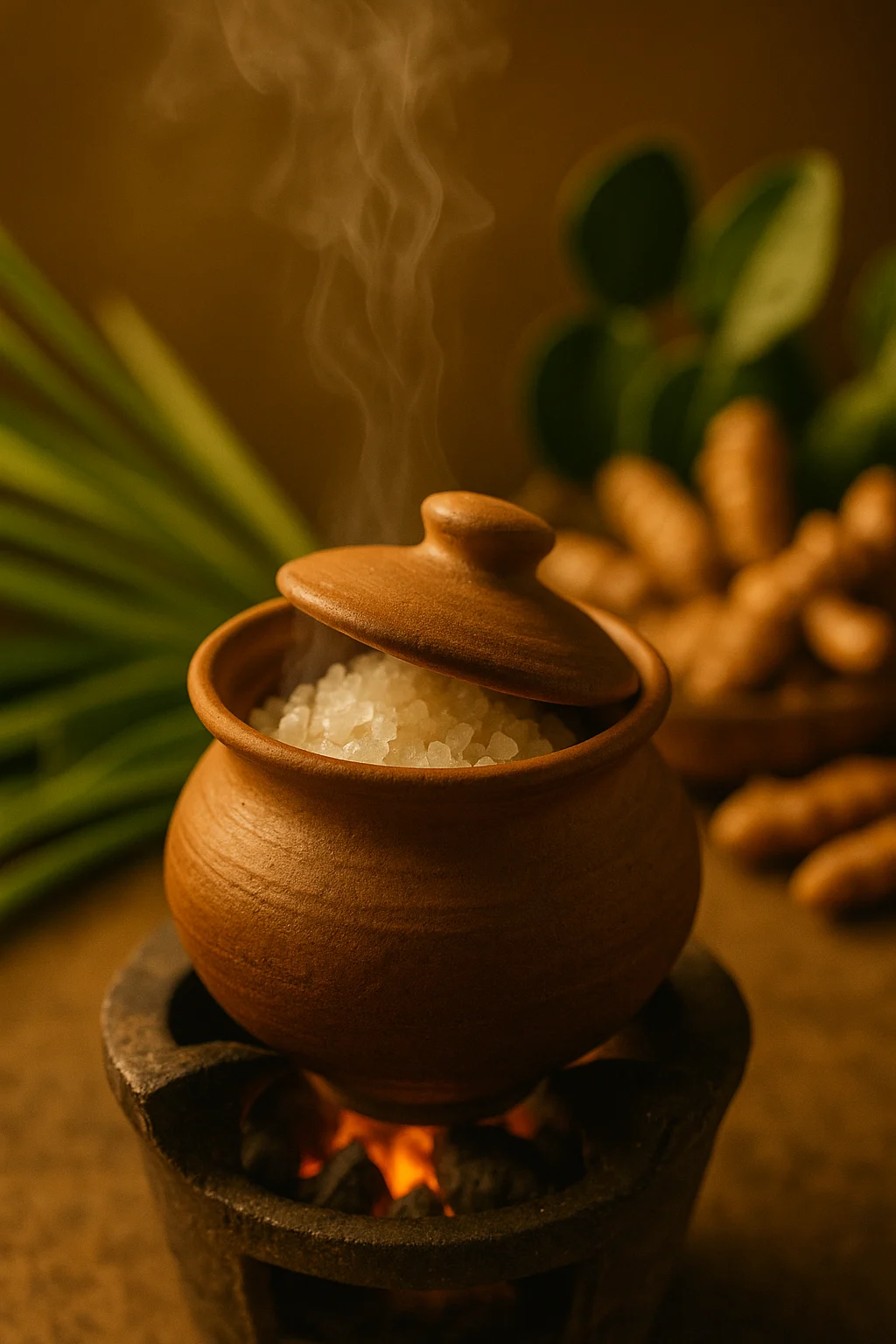
The Thai article describes heating coarse sea salt in a traditional pot, wrapping it with crinum leaves and herbs, and applying it around the abdomen. This is a practitioner-led procedure involving heat; it is not a home-use instruction.
Traditional aims and realistic expectations
Traditional descriptions include warmth, comfort, circulation and postpartum recovery. Claims about faster uterine involution, increased lochia flow, stronger abdominal muscles or a flatter abdomen are not established clinical outcomes in this article. It should not replace postnatal care.
When might it be considered?
The original guide mentions seven days after vaginal birth or thirty to forty-five days after caesarean birth. These are not automatic clearance dates. Ask the maternity team and practitioner to assess wounds, bleeding, pain, complications and whether heat or pressure is appropriate.
When to postpone
- Fever, suspected infection or feeling unwell
- An unhealed or inflamed wound
- Unexplained pain or bleeding
- Any situation where the treating team advises against heat or pressure
Combining treatments does not guarantee a better result. Burns are possible if heat is not controlled.
Ask about the clinic’s postpartum programmes
The Thai article describes clinic and home appointments, with programmes of three, five, seven or ten days. Confirm current availability, contents and prices. Tell Ounruean Clinic on LINE how and when you gave birth and any maternity advice before booking.