
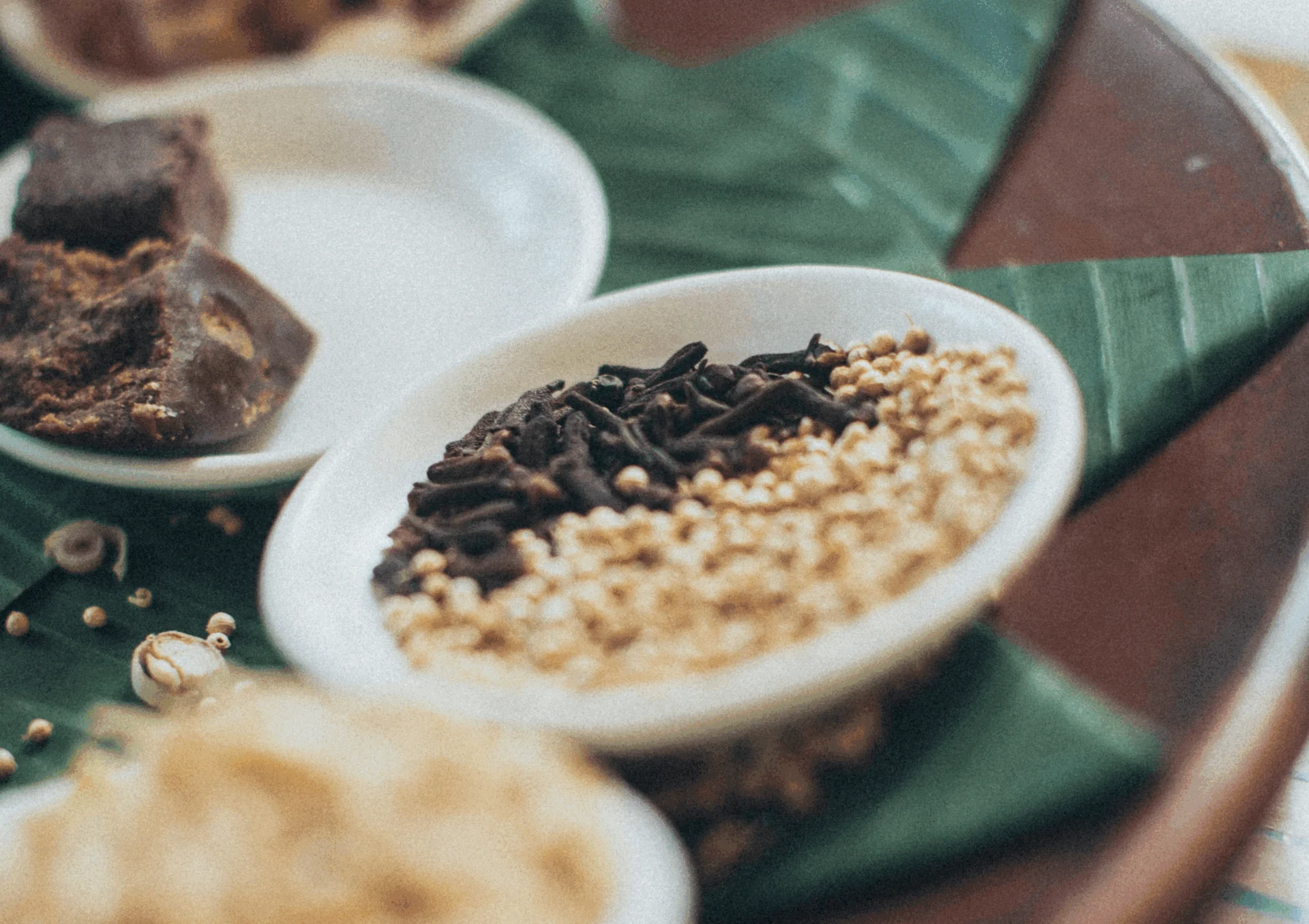
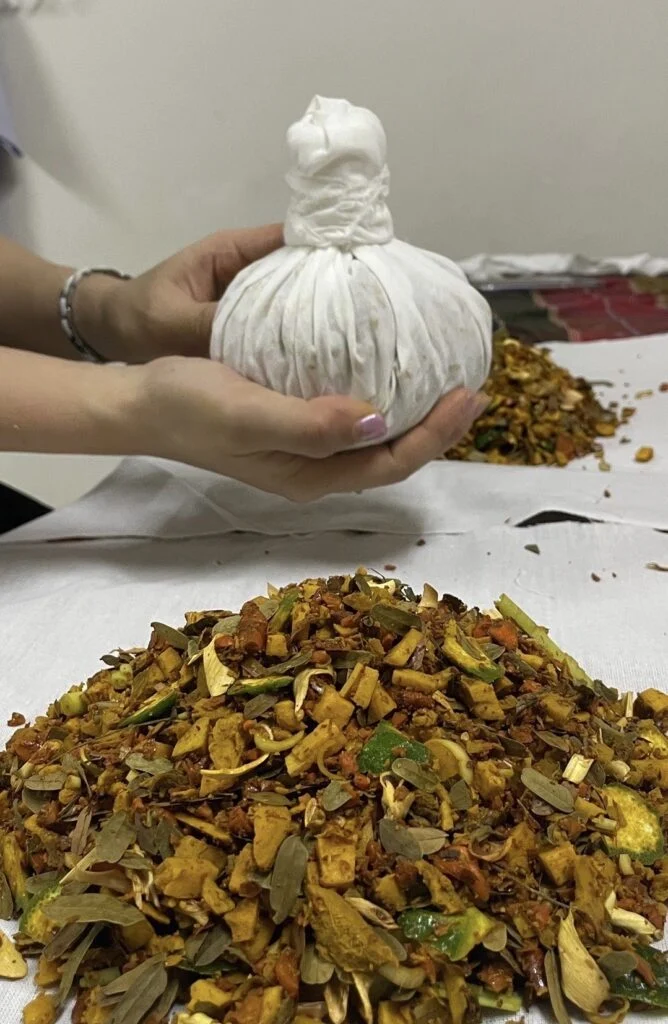
Herbal compresses are used in Thai traditional medicine, often alongside massage. A practitioner may consider a compress on its own when massage is unsuitable. The treatment combines a heated cloth bundle with a herbal mixture; suitability depends on the person, symptoms, skin and tolerance of heat.
What a session aims to do
Traditional practice uses warmth for comfort and muscle tension. The Thai article describes relief of aches, stiffness and swelling, but this is not a promise that every condition will improve. New swelling, redness, heat or pain after an injury needs assessment before heat is applied.
Common ingredients
- Phlai
- Makrut lime peel
- Lemongrass
- Tamarind leaves
- Turmeric
- Salt
- Camphor
- Borneol
Formulas differ. Tell the practitioner about allergies and ask which ingredients are being used. Traditional descriptions of individual herbs do not establish that the finished compress treats heart disease, infection or a skin disorder.
Precautions
- Check the temperature before contact and use an appropriate cloth barrier.
- Avoid open wounds, fragile skin and areas with reduced sensation.
- Extra care is needed when a person has diabetes, paralysis, frailty or difficulty reporting discomfort.
- Do not place strong heat on a newly injured, red, hot or swollen area without assessment.
- Tell the practitioner immediately if the skin burns, stings or feels uncomfortable.
Follow the practitioner’s aftercare advice. A traditional explanation about balance after bathing is not a medical rule that applies to everyone.