
What is a fresh herbal compress?
A fresh herbal compress contains freshly prepared herbs wrapped in clean cotton cloth and tied with a handle. It is steamed before use. Warmth may help relaxation and some muscle discomfort, but suitability and burn prevention matter.
Prepare herbs and equipment
Common ingredients include plai, turmeric, lemongrass, makrut lime peel, tamarind leaves and soap pod leaves. Some formulas also contain salt or aromatic ingredients. Follow a formula checked by a qualified practitioner, and do not add extra camphor, borneol or essential oils for a stronger scent.
Prepare clean cotton cloth, cotton string, a knife, chopping board, mortar or grinder, mixing bowl and a steamer with a rack.
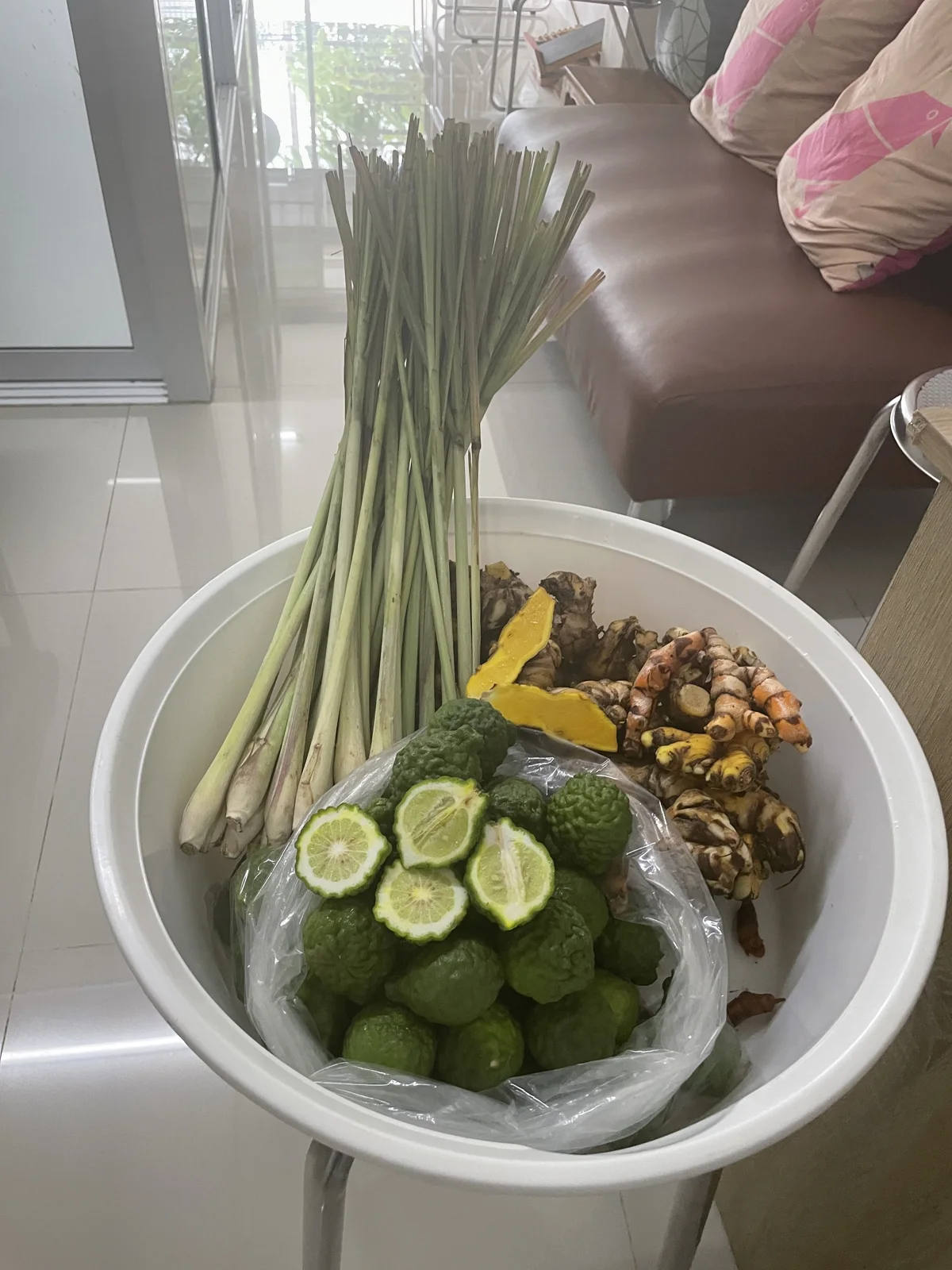
1. Select, wash and drain
Use correctly identified herbs. Remove spoiled, mouldy or damaged material. Wash away dirt, especially around rhizomes and leaves, then drain in a clean container. Wash your hands and clean the preparation surface.
2. Chop and mix
Cut the rhizomes, lemongrass and lime peel into small pieces and crush coarsely. Avoid hard, sharp pieces that could poke through the cloth. Mix evenly with the leaves and other ingredients specified by the formula without making the mixture waterlogged.
3. Wrap and tie
Place the mixture in the centre of clean cloth, gather the edges and shape a firm ball. Tie the neck securely and fold the remaining cloth into a handle. Check for loose string or sharp pieces. Choose a size that is comfortable to hold and suitable for the intended area.
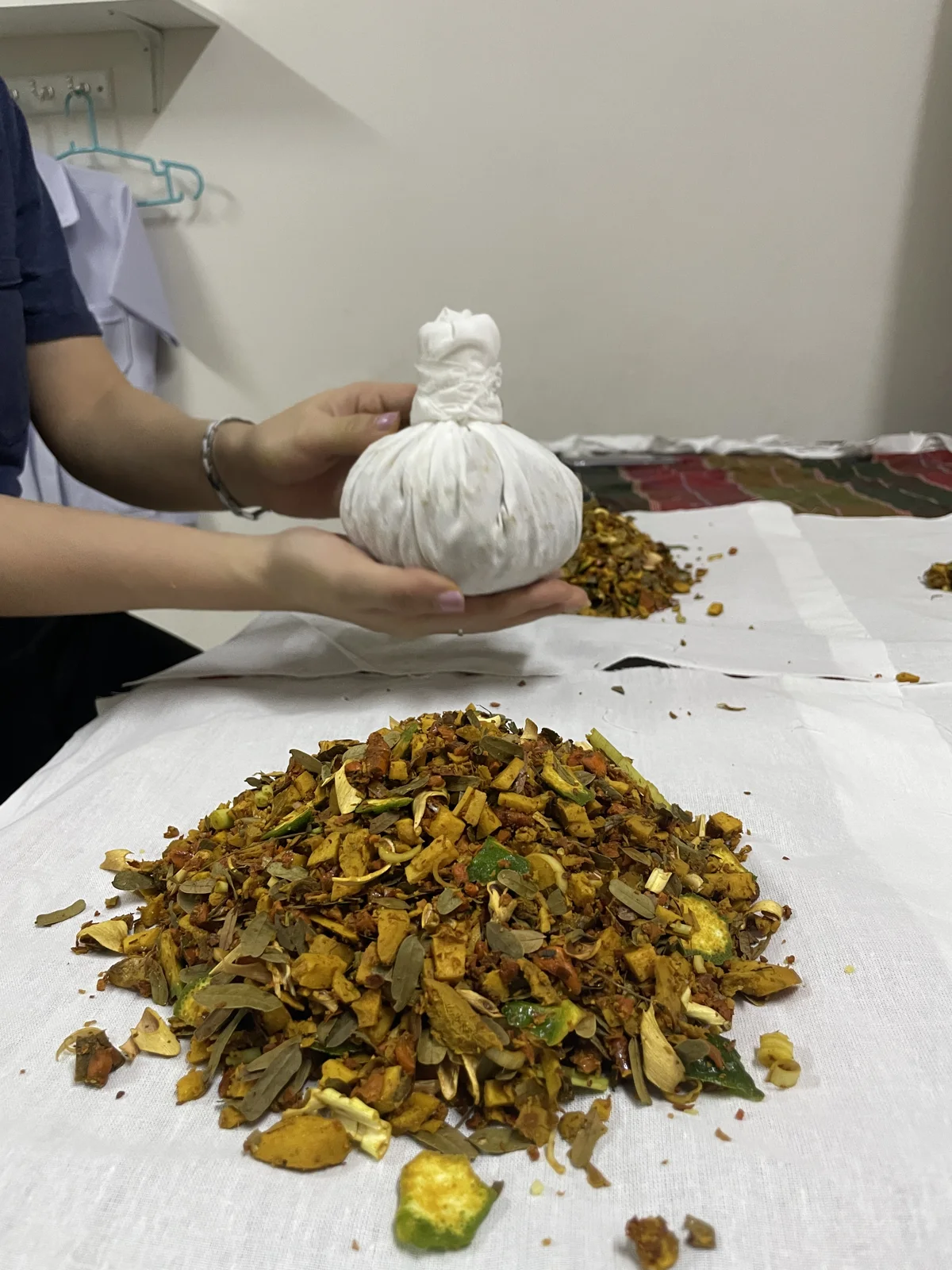
4. Steam and check the temperature
Place the compress on the steamer rack and follow the formula and equipment instructions. Avoid escaping steam when opening the lid. Allow the compress to cool and check its warmth before every skin contact. Use a protective cloth if needed, keep it moving and stop if it burns, feels too hot or causes a rash.
Storage of fresh compresses
Prepare only what is needed, keep each person’s compress separate and label the preparation date. Follow the provider’s instructions for moisture control, containers and refrigeration. Usable life depends on preparation, hygiene and handling, so elapsed days alone cannot establish safety.
Discard any compress with mould, a sour or spoiled smell, or deterioration. Re-steaming does not make a spoiled compress safe to use.
When to seek an assessment first
Avoid heat over open wounds, infected skin or a new injury that remains swollen, red or hot. Reduced sensation, including in some people with diabetes or paralysis, increases burn risk. Children and older adults need particular care. Always mention herbal allergies.
During pregnancy or postpartum recovery, ask a clinician about suitable areas and timing. Do not self-treat surgical wounds or a red, hot, painful breast with a hot compress. Fever or unusual symptoms need medical assessment.