
Bloating, dizziness, palpitations and poor sleep are sometimes described as “too much wind” in Thai traditional conversation. These symptoms can have different causes. Chest tightness, fainting or breathing difficulty should never be dismissed as wind.

What does wind mean in the traditional model?
Wayo, or wind, is one of the four elements. Traditional theory uses it to describe movement, including breathing and digestive activity. It is not simply gas trapped in the body, and a traditional description cannot replace a medical diagnosis.
Factors discussed in the Thai article
- Irregular meals and foods that an individual finds uncomfortable
- Long periods of sitting or limited movement
- Stress and insufficient rest
- Constipation
- Cold surroundings, described within traditional theory
These associations do not prove the cause of a particular person’s symptoms.
Practical self-care
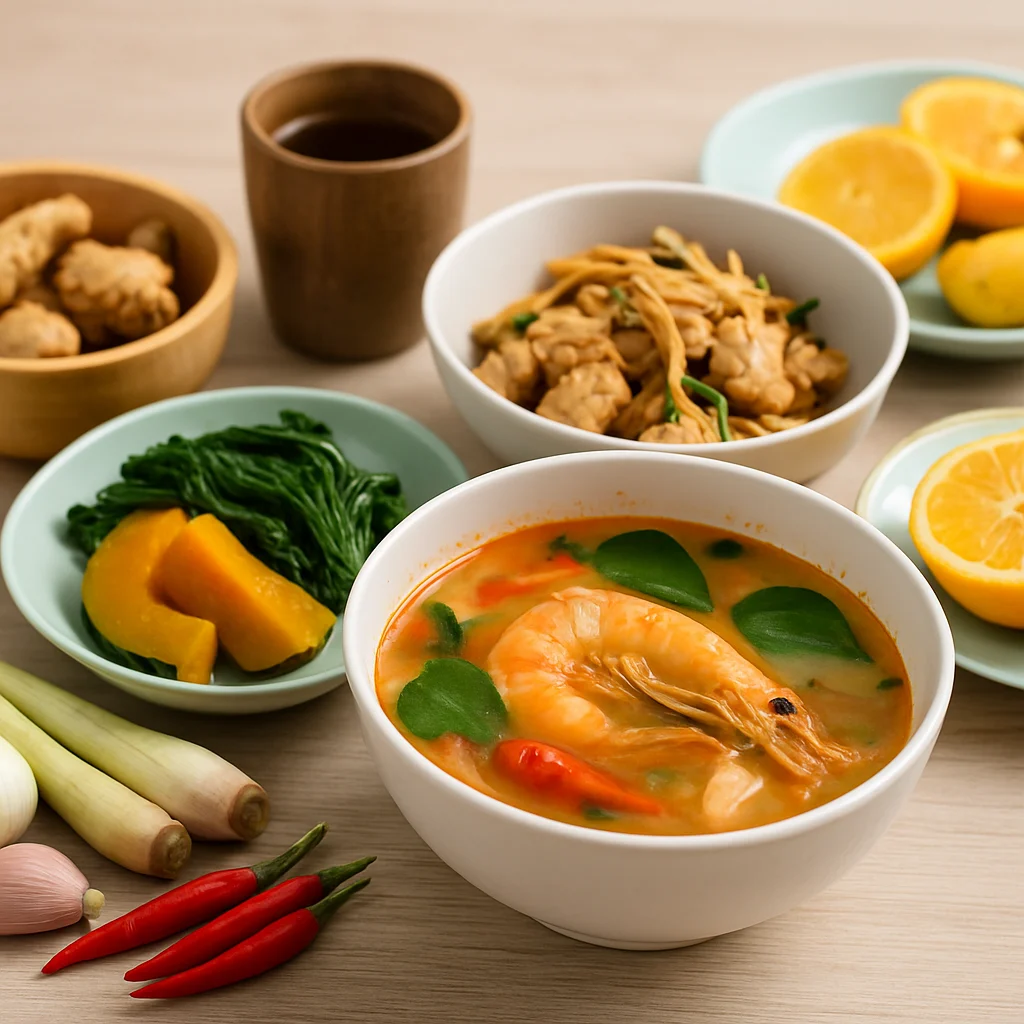
Notice which foods actually trigger discomfort rather than removing whole food groups unnecessarily. Eat regularly, move gently as tolerated and make time for rest. The traditional guide mentions ginger, lemongrass, pepper and basil; using them as food is different from taking concentrated herbal products.
Massage, compresses or steam may be discussed after assessment. They are not a way to diagnose unexplained palpitations or remove gas from muscles. Check herbal products against medicines and health conditions with a qualified professional.
Discussing symptoms with the clinic
The clinic can discuss its traditional assessment, massage, compresses and herbal services. Explain when symptoms began, what makes them worse and any tests or treatment already received. See services and prices or contact the clinic. For urgent symptoms, seek medical help rather than waiting for a massage appointment.